
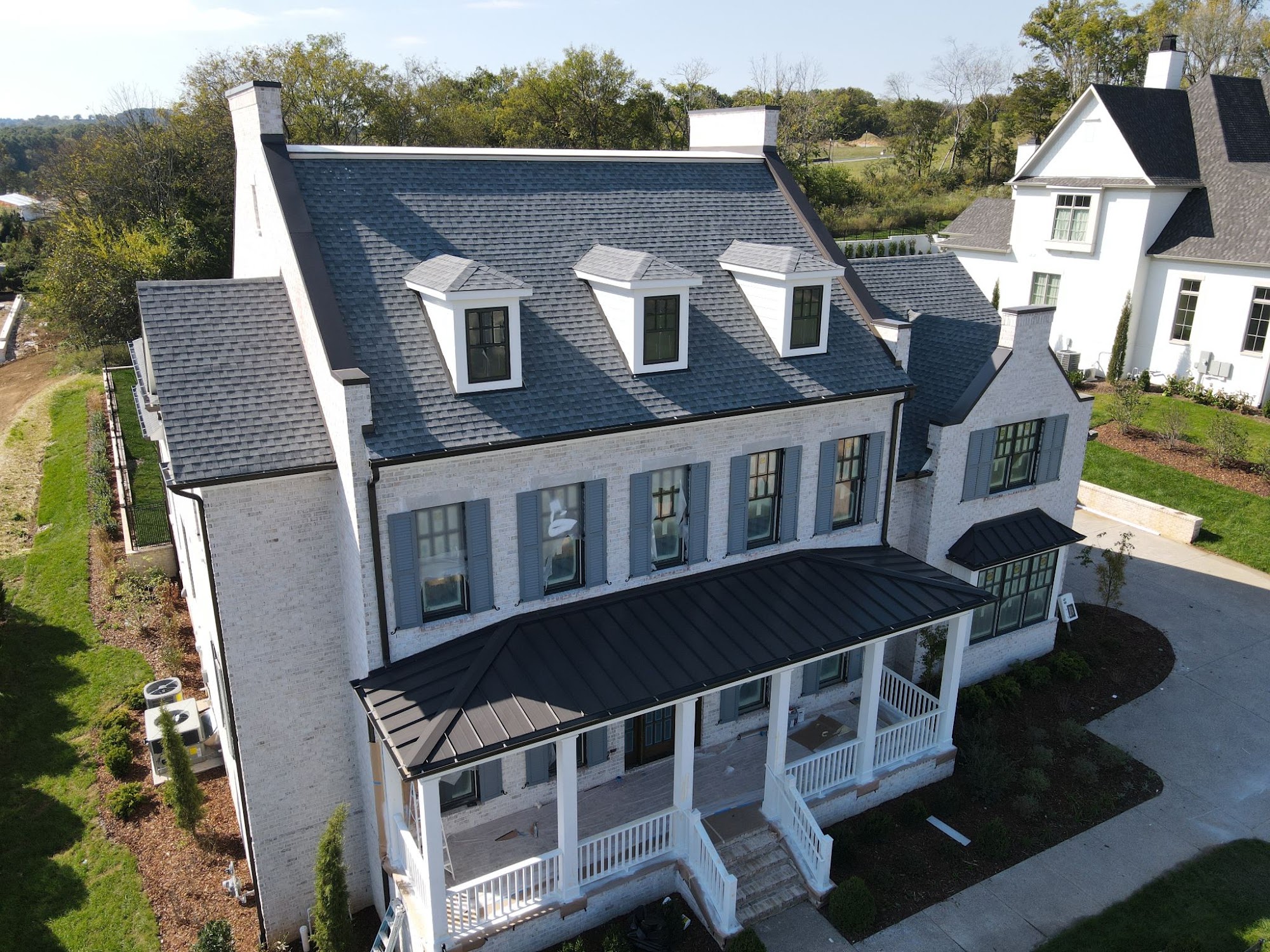

Tennessee is a four-season state with severe weather and climate challenges that put your roof to the test year-round. Fortunately, roofing technology has come a long way over the last few decades. Today, asphalt shingles are engineered with modern materials that provide superior strength, stability, and long-term protection from the hail, strong winds, and climate fluctuations we commonly face in Middle Tennessee.
In this article by the Tennessee roofing experts at Austermiller Roofing, you will learn how modern material science works to better protect your home against the severe weather threats and climate challenges, as well as information on lifespan, warranties, and answers to other frequently asked questions about asphalt shingle roofs.
The Evolution of Modern Asphalt Shingles: What Makes Modern Asphalt Shingles Different?
Asphalt shingles have been around for over 125 years and have come a long way since their early rag-felt and gravel origins, and even from traditional 3-tab shingles that dominated roofs for decades.
Today, asphalt shingles are made from modern materials that work together as a comprehensive defense system, offering superior hail and wind resistance, improved heat reflectance, protection against algae, and a significantly longer lifespan.
Several material science advancements differentiate modern shingles from older options, including:
- A Durable Nonwoven Fiberglass Core: Legacy 3-tab shingles used paper-based organic felt that absorbed moisture over time. Modern architectural shingles feature a strong fiberglass base that delivers superior fire resistance and high tear strength, and that prevents warping, shrinking, or buckling under extreme temperature changes.
- Multi-Layer Lamination Construction: Instead of thin, single-layer 3-tab designs, modern shingles use bonded, overlapping layers that offer double thickness and significantly enhance wind resistance.
- Advanced Sealant Technology: Newer shingles use thermally activated adhesive strips that, once installed, respond to natural solar heat, forming a secure bond that shields against severe wind uplift and wind-driven rain.
- Advanced Surface Mineral Granules: Modern shingles are specially engineered with mineral coatings that deflect infrared solar radiation and release copper ions that prevent dark algae discoloration.
- Product-Specific Material Modifications: Select impact-resistant shingle lines blend rubberizing polymers (Styrene-Butadiene-Styrene) into the asphalt to give the shingles rubber-like elasticity. This flexibility allows them to absorb severe hail impacts and handle thermal expansion without cracking. SBS modification is an advanced feature used in high-performance, storm-rated products. Other standard architectural shingles typically use refined oxidized asphalt.
While traditional three-tab shingles are still available as a budget option, production has drastically declined over the last decade. Most contractors now consider modern asphalt shingles the standard for residential roofs.
How Do Modern Shingles Address Tennessee-Specific Climate Challenges?
Tennessee experiences severe thunderstorms, hail, strong winds, and high heat and humidity. Modern shingles address these challenges with higher impact ratings, better wind resistance, solar-reflective energy efficiency, and copper-infused algae resistance.
Severe Storm Protection: How Impact-Resistant Shingles Handle Hail
In Middle Tennessee, it’s common to have severe thunderstorms that bring damaging hail. To help protect homes against this kind of storm damage, manufacturers developed Impact-Resistant (IR) shingles.
To earn an IR designation, shingles undergo rigorous lab testing under the Underwriters Laboratories (UL) 2218 standard. During this test, technicians drop steel balls up to two inches in diameter from a height of 20 feet directly onto the shingle surface to see if the material tears, cracks, or fractures.
The UL 2218 system rates shingles from Class 1 up to Class 4 based on the size of impact they can take without cracking. A UL 2218 Class 4 rating indicates the highest level of impact resistance.
Older 3-tab shingles typically reach only Class 1 or Class 2 ratings, or carry no impact rating, since standard oxidized asphalt can crack under direct hail hits. Shingles using SBS polymer-modified asphalt tend to excel in these tests and receive a Class 4 rating because their rubberized core flexes under impact, reducing the likelihood that the underlying fiberglass mat will rupture.
It’s worth mentioning that while a higher class means better protection from severe weather, this rating is only a laboratory impact-test classification. It doesn’t measure cosmetic denting or superficial granule loss, and it does not guarantee that a roof will be hail-proof.
Another possible benefit of modern IR shingles is that you may qualify for a reduction in your homeowners insurance premium. Many major insurers in Tennessee offer 10-35% discounts for UL 2218 Class 4 roofs. Carriers and policies vary. Check with your provider to confirm discount amounts and terms.
High-Wind Defense: How Modern Shingles Improve Wind Resistance
Modern shingles are designed to withstand strong winds, which happen frequently across Middle Tennessee. This is achieved through heavy-duty fiberglass reinforcement mats, high-tack thermally activated sealants, and precision installation.
To determine wind uplift resistance, shingles are tested in accordance with standards such as ASTM D7158. During testing, sealed shingle courses are placed on test decks and subjected to fan-driven airflow calculations and physical uplift measurements to evaluate the performance of the adhesive seal and reinforcement mat under aerodynamic forces.
The ASTM D7158 rating scale breaks down into three main levels:
- Class D: Tested to resist wind uplift forces up to 90 mph.
- Class G: Tested to resist wind uplift forces up to 120 mph.
- Class H: Tested to resist wind uplift forces up to 150 mph.
Legacy 3-tab shingles usually max out at Class D ratings, while most modern architectural shingles easily reach Class G or Class H standards.
Beating The Heat: How Solar-Reflective Shingles and Cool Roof Technology Maximize Tennessee Energy Efficiency
Tennessee summers are hot and humid, which can cause attic temperatures to rise to levels that force your AC unit to work overtime. Modern, solar-reflective asphalt shingles use specially engineered granules that reflect infrared sunlight away from the roof deck. The result is reduced heat transfer into your home, less strain on your HVAC system, and a significantly cooler roof surface.
For many years, homeowners looked for an ENERGY STAR label if they wanted a more energy-efficient roof. You won’t see those in 2026. The U.S. EPA officially retired the ENERGY STAR certification program for roofing products in June 2022. Today, energy efficiency ratings are set by the Cool Roof Rating Council (CRRC).
To evaluate heat performance, the CRRC conducts tests measuring solar reflectance and thermal emittance to determine the Solar Reflectance Index (SRI). When benchmarked on a standard 0 to 100 scale, a higher score indicates the shingle is better engineered to reject solar heat and stay cool.
Traditional dark asphalt shingles carry lower SRI ratings (often between 0 and 15), meaning they absorb up to 90% or more of the sun’s solar radiation. In contrast, modern cool roof shingles engineered with solar-reflective granules achieve higher SRI scores, typically ranging from 20 to 35 or more. You can find CRRC ratings and SRI scores in the official CRRC Rated Products Directory and listed on manufacturer specification sheets.
While shingles with a higher rating do an excellent job of reducing surface heat absorption, whether or not cool roof shingles will lower electric bills in Tennessee depends on your home’s insulation levels, attic ventilation, HVAC efficiency, and overall weather conditions.
Preserving Curb Appeal: How Algae-Resistant Granules Reduce Black Roof Streaks
Middle Tennessee roofs are prone to Gloeocapsa magma, a microscopic blue-green algae that thrives in humid climates. If you’ve seen a dark streak on your roof, that’s probably what you’re looking at. This black discoloration happens when airborne algae spores land on the roof surface and feed on limestone fillers in standard asphalt shingles.
Modern algae-resistant shingles incorporate copper-containing granules mixed into the shingle surface layer. As rainwater washes over the roof, trace amounts of copper ions are gradually released, creating an inhospitable environment for algae growth.
Luckily, this buildup is primarily an eyesore. According to the Asphalt Roofing Manufacturers Association (ARMA), algae affects a roof’s visual appearance but does not cause structural damage or degrade the asphalt shingle material itself.
That said, to clean it off your roof, you’d need to use harsh chemical treatments or pressure washing, which can strip away granules and prematurely age your roof. Most homeowners also care about curb appeal and don’t want black streaks ruining the appearance of their home. Installing a modern asphalt roof with copper-infused granules keeps your roof looking clean and streak-free without requiring extra maintenance.
Investing in Quality: What to Know About Shingle Lifespan and Warranties
Because they are engineered to be more durable, modern shingles last longer and generally offer much stronger warranty coverage than traditional three-tab shingles.
Legacy 3-tab shingles typically offer a 15- to 20-year service life and a basic 20- to 25-year limited warranty. Modern architectural fiberglass shingles are engineered to deliver 25- to 30-plus years of reliable protection. Because of this increased durability, architectural shingle styles are commonly backed with 50-year or lifetime limited warranties.
The keyword is limited. Your roof’s actual service lifespan doesn’t always equal its listed warranty length, and you should never rely on warranty length alone as a guarantee of performance. Manufacturer warranties primarily cover material defects, not normal wear and tear from weather.
Also, while modern shingles are designed to be more durable, don’t forget that they still require routine maintenance, proper system ventilation, and expert installation by a certified contractor.
Asphalt Shingle Frequently Asked Questions
What are the main differences between fiberglass and asphalt shingles?
Fiberglass shingles are actually a specific type of asphalt shingle. Older, legacy 3-tab asphalt shingles relied on organic paper-felt bases saturated with asphalt. Modern asphalt shingles use a nonwoven fiberglass reinforcement mat coated in asphalt and protective surface granules, which provides significantly higher tear strength, superior fire resistance, and greater dimensional stability through temperature changes.
How do I determine the best type of shingles for my roof?
Local climate, home architecture, HOA guidelines, and budget are all factors to consider when selecting the right type of shingles for your home. A licensed roofing contractor can assess your roof pitch and structural needs to recommend the ideal match.
Where can I buy high-quality asphalt shingles for my home?
High-quality, professional-grade asphalt shingles are distributed through commercial building supply networks to licensed contractors. Homeowners do not need to buy shingles directly. A certified roofing contractor will purchase them for you and ensure you receive commercial-grade materials backed by full manufacturer system warranties, along with professional installation.
Where are asphalt shingles made?
The vast majority of asphalt shingles used across North America are manufactured in specialized industrial facilities located throughout the United States. Major roofing manufacturers like GAF operate regional plants across the country where they process raw fiberglass, asphalt, and surface mineral granules into finished roofing systems under strict ASTM quality standards.
Austermiller Roofing: Middle Tennessee’s Trusted Local Roofing Experts
At Austermiller Roofing, we have served homeowners across Nashville, Mt. Juliet, and Murfreesboro for over 30 years. We know the region’s climate and weather patterns and understand what roof type is required to protect your home.
Whether you are installing a new roof, looking to upgrade from three-tab shingles to architectural asphalt shingles, or need roof repairs after a storm, our team of licensed and trusted roofers has the local expertise, experience, and quality roofing materials to get the job done right.
Contact us today to schedule a comprehensive roof evaluation or consult with our team on the best shingles for your Middle Tennessee home.
Sources
Underwriters Laboratories (UL): UL 2218: Standard for Impact Resistance of Prepared Roof Covering Materials
FM Approvals (Factory Mutual): ANSI/FM 4473: Specification Test Standard for Impact Resistance Testing of Rigid Roofing Materials
ASTM International: ASTM D7158: Standard Test Method for Wind Resistance of Asphalt Shingles
ASTM International: ASTM D3161: Standard Test Method for Wind Resistance of Steep Slope Roofing Products
Cool Roof Rating Council (CRRC): CRRC Rated Products Directory
U.S. Environmental Protection Agency (EPA): ENERGY STAR Program Sunset Notice for Roof Products
Asphalt Roofing Manufacturers Association (ARMA): Technical Bulletin: Algae Discoloration of Roofs
ASTM International: ASTM D3462: Standard Specification for Asphalt Shingles Made from Glass Felt
Asphalt Roofing Manufacturers Association (ARMA): Residential Asphalt Roofing Technical Resources
Tennessee Department of Commerce and Insurance (TDCI): Tennessee Department of Commerce and Insurance